
A Junket Around Jeonju
Jan 9, 2019
5 min read

Seeing a different part of South Korea was on the agenda for today, and the first use of our Korail Pass (which we decided on a four day pass used over a ten day period) on the KTX which are the high speed trains (and like Japan, extremely efficient, fast and very comfortable and having free wi-fi is a bonus too) We left Dongmyo subway station taking Line 1 for Yongsan station where we changed for the KTX, and once again I am grateful that the train system is so easy to negotiate as it makes a long day so much easier.
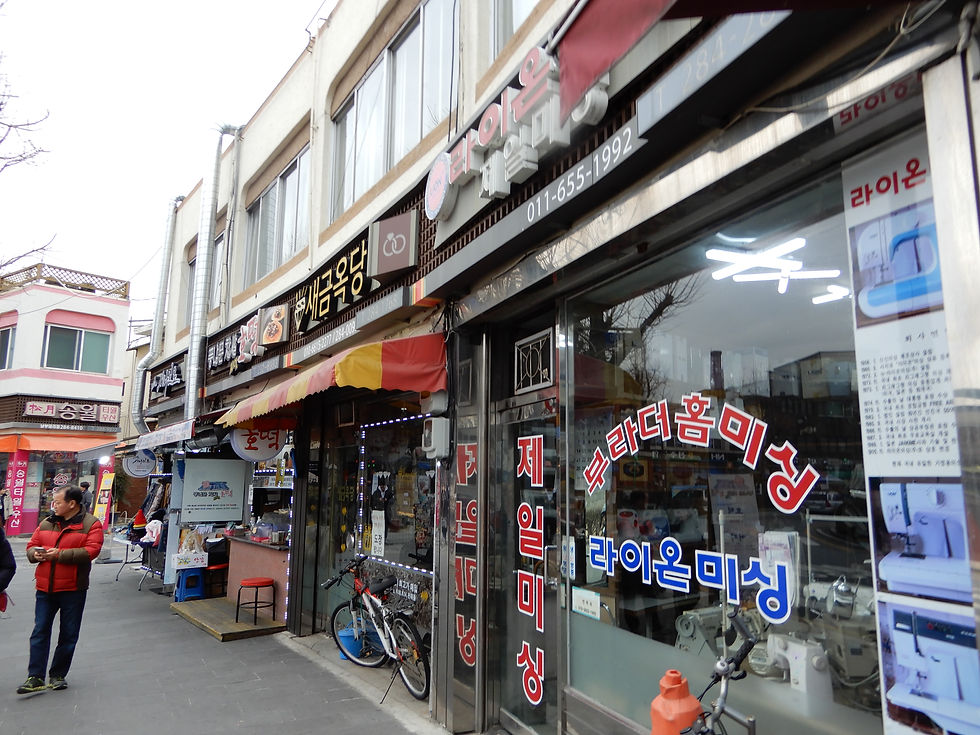
Today's destination was Jeonju (194km south west of Seoul which is one and a half hours on the high speed train) which is known for it's beautiful Hanok Village which lies in the center of the city and we thought it would be an interesting contrast to the one in Seoul.

Jeonju is also known for it's food, especially bibimbap and eating that was definitely on today's agenda.
We arrived in Jeonju and took a public bus through the streets and straight away you could tell it was different from Seoul and we were a little concerned because there is even less English spoken in Jeonju but we managed to navigate our way to where we needed to be.
(The good thing about being a planner, I always read a little bit about the area I am going to and try and find some key places ....just in case we get lost or I am stuck on a bus with no map or English telling me the stops...and I recognized the Pungnammun gate from pictures and knew it was time to get off.)

Our first stop was a simple monument to the Korean "Comfort Women", the victims of sexual slavery during the Japanese occupation which has been very much in the news over here at the moment. There has been subtle protests about the number of women who went missing during this time who are not acknowledged as being missing or even in war casualty statistics nor has there ever been an apology for the actions of the past. It was very simple yet very poignant and it makes me grateful that I have not had to experience a state of war in the country that I live in and have only read about or seen on the screen the horrors that people (especially women) experience during these times.

Behind the monument is Pungnammun gate which is the last gate standing of the original four which were built in the middle of the Joseon Dynasty and partially destroyed during the Japanese invasion of 1592-98 and later rebuilt in 1978.
As you head into the area that is the 'tourist area' you pass the Jeondong Catholic Cathedral (Historic Site No. 288)

which was built in honour of the Roman Catholic Martyrs of the Joseon Dynasty. (It surprises people when they find out that 31% of the population of South Korea are Christians, 23% Buddhist, 2% other religions and 44% identify as having no religion at all, although as we found out the other day a lot will admit to having Shamanist rites to ward off evil spirits "just in case". Some of the bricks used in the building of the Cathedral are said to have been from the Jeonjueupseong Fortress that was torn down by the Japanese when they invaded South Korea.

From here there was the Gyeonggijeon Shrine ( Historic Site No. 339), (entry cost is W3000/ $4 Aus)which was built to honor King Taejo who was well known as the admiral who defeated Japanese pirates in the 1300s before becoming the first king of the Joseon Dynasty (He was also known for his role in overthrowing the Goryeo Dynasty) The shrine holds the mortuary tablets of the King and his wife and like many buildings in Korea was partially destroyed in the Imjin War (the Japanese invasion of 1592-98) and remodeled in 1614.

On the grounds of the shrine there is also a museum which houses portraits of the Kings, palanquins and other artifacts and is well worth a look.
We walked through the Hanok village, (which has around 800 traditional houses in the area and they are amazing, and on one of my next trips to South Korea I would like to stay in one so it is being added to my to-do list) enjoying seeing everyone in the hanboks as they wandered around. It is quite touristy with a huge number of hanbok hire shops, but the vibe was livelier than the hanok village in Seoul (it could also have been because it was about 4 degrees warmer so so were the people) We had many people greeting us and wishing us a happy holiday and the whole atmosphere felt rather festive so I would love to see how it is when there is actually a festival going on.

We took a few back alleys and wandered around and found that it is just a normal neighbourhood with clothes hanging on the lines and pets in the backyards, and not in the least bit touristy away from the main streets and made me want to come back even more to spend some time here (an overnight trip next time around) so I could explore the city a bit more and not just the Hanok Village even though it was a lot of fun and I could probably linger here longer.
We then headed towards the Jaman Mural Village
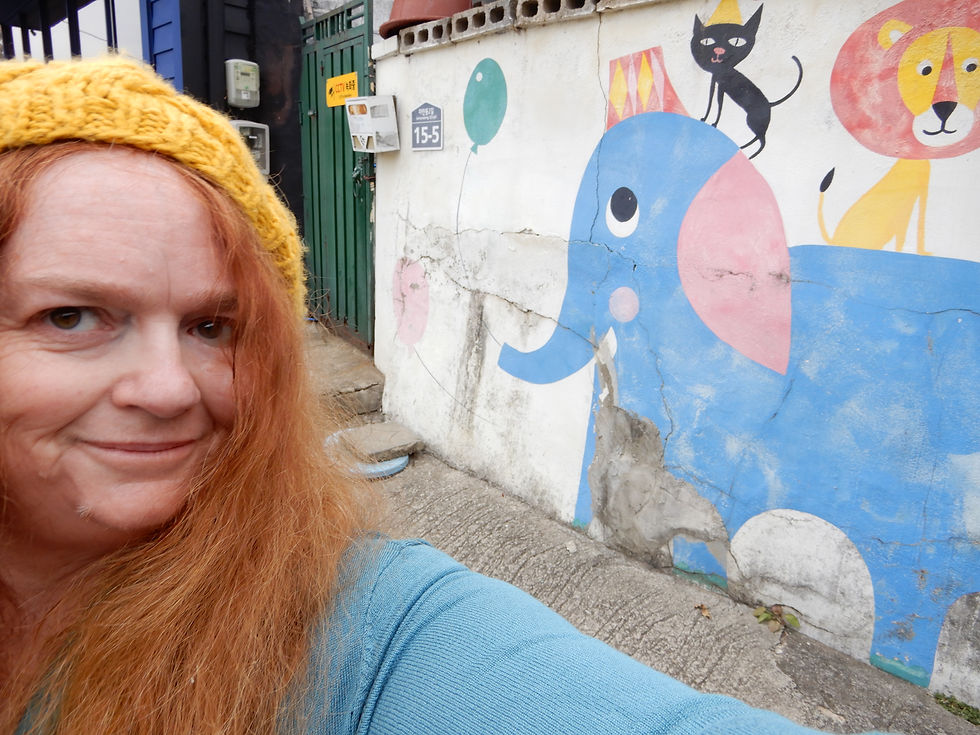
which is perched at the foot of Seungamsan Mountain and is across the highway from the Hanok Village (and connected by a bridge) It is a bit of a steep walk to get here but it is well worth the visit if you are wanting to venture away from the main street of the village. Jaman was a run down little town until someone decided to paint some murals on the walls of the houses and now it has become an art studio in itself with some great artwork and murals and amazing views and it was a fun little side trip to take and worth the steep walk to get to it.

As we wandered back in search of food we came across Omokdae, Omokdae is Yi Seong Gye (later King Taejo) stopped to celebrate his victory against the Japanese and is in a pretty setting on top of a hill with views over Jeonju Hanok Village.
The walk back down takes you through a pretty park

which would look absolutely amazing in spring or autumn when the trees are in full colour.
We wandered back through the village in search of food and found a great restaurant for a bibimbap lunch (which is a said to be created in Jeonju)

with the most amazing array of side dishes and drinking moju which is a rice wine drink local to the area which tasted like apple pie needless to say Linda and I enjoyed that immensely and would like to see if I can find it take back home, but we were running out of time as we had a train to catch (we'd booked seats when we arrived thinking that nine hours would be enough to enjoy a small snippet of Jeonju but we could have done with catching a later train as we were having so much fun.)
We took a taxi back to the station (surprisingly only costing us

Comments