
Regional Refreshments
Jan 14, 2019
2 min read

While out of Seoul we tried to find foods that were local to that area and here are just some of them or just regional versions of them.
While in Jeonju we had to eat bipimbap which is said to have been created in this region so had to try it in it's birthplace and we were not disappointed, even the side dishes were a feast in themselves.

The best thing about eating in South Korea is anticipating what side dishes you get and in all honesty with our meal in Jeonju we could have filled our stomachs on that alone as you can see. (The apple cinnamon alcohol went down a treat as well)
Choco-pies are a big thing over here, in every food store you can get packs of them and at the station there is the PNB
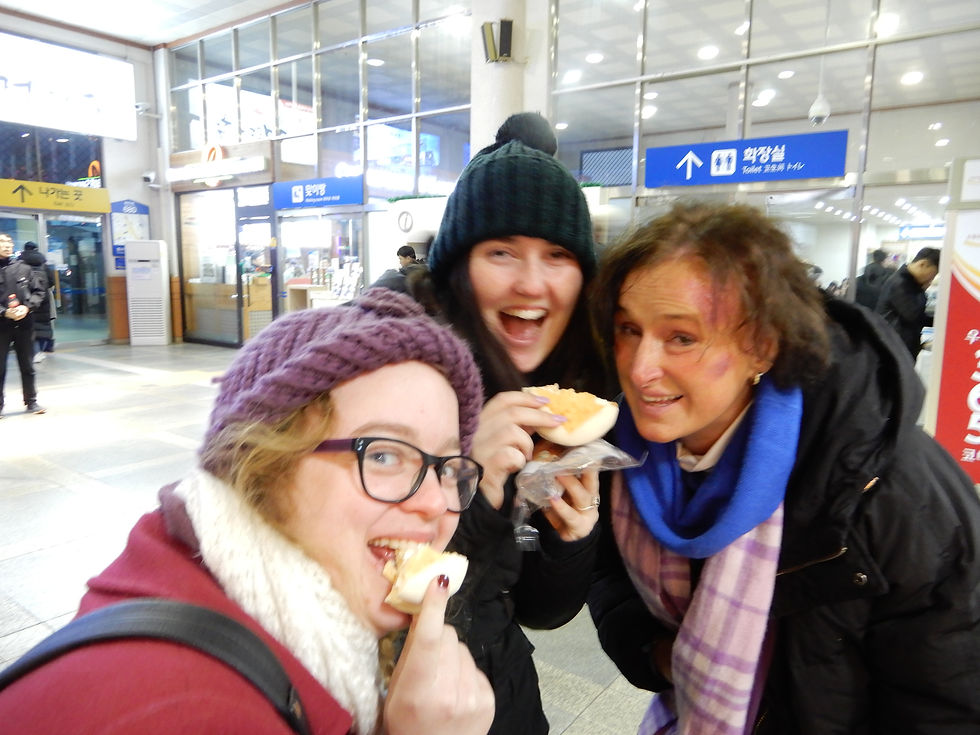
bakery (Poong Nyeon Bakery) which is said to be one of the top five bakeries in South Korea which had many different variations of them (and we chose vanilla ones filled with sweet potato and they were divine and we may visit a few more to see how they compare)
We had eaten so well for lunch (and our train snacks) we made do with cup noodles for a late dinner when we arrived back in Seoul. And because you can get side dishes at the 7-11 like kimchi and boiled eggs we at our noodles
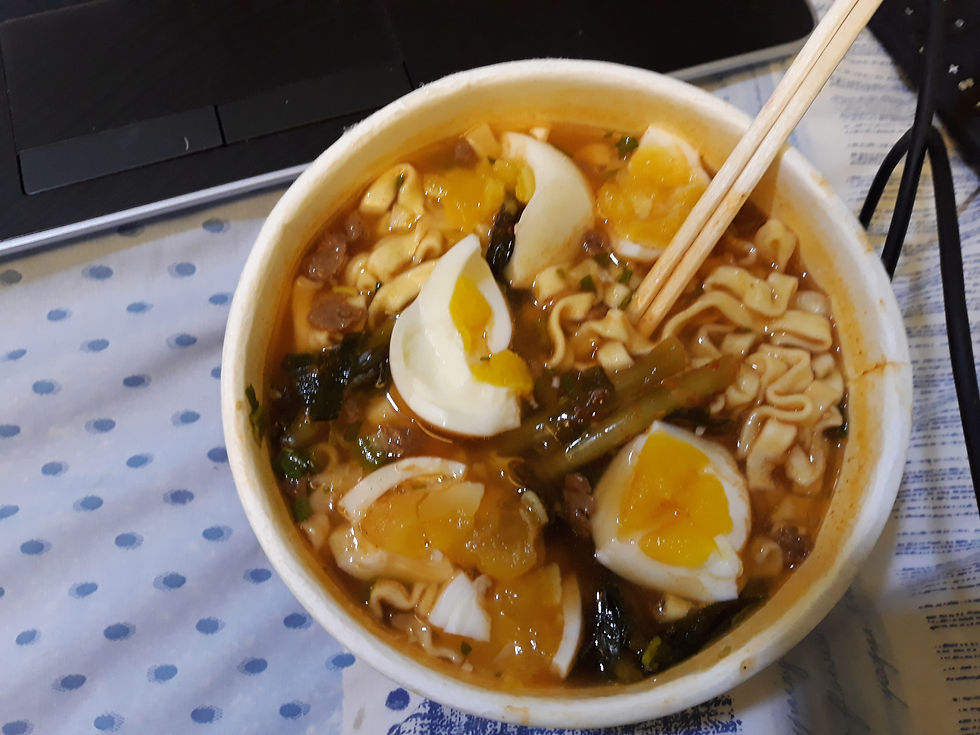
South Korean style and I don't think Maggi noodles back home will ever be the same.
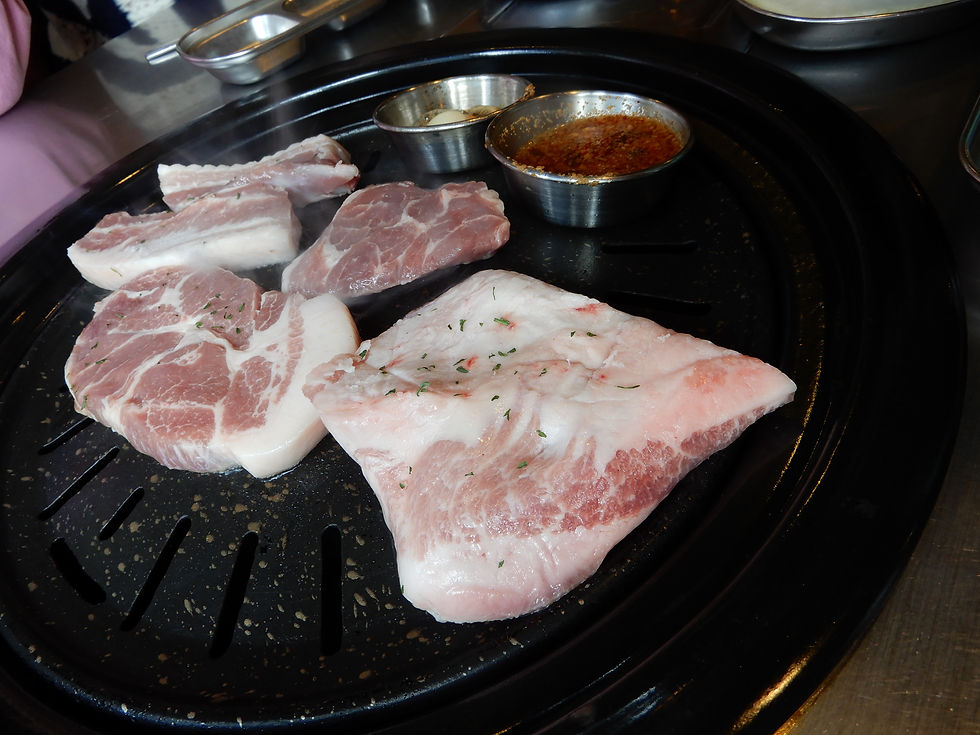
In Busan we ate BBQ (which was good but I've been blessed with a great Korean BBQ back home so it is hard to compare although the sides were amazing.)

we have become coffee and cake aficiondos since we have come to South Korea, but we find that afternoon or morning tea tends to be the expensive meal of the day costing about W10,000 to 12,000 ($12 to 15Aus depending on the choice of cake or drink)


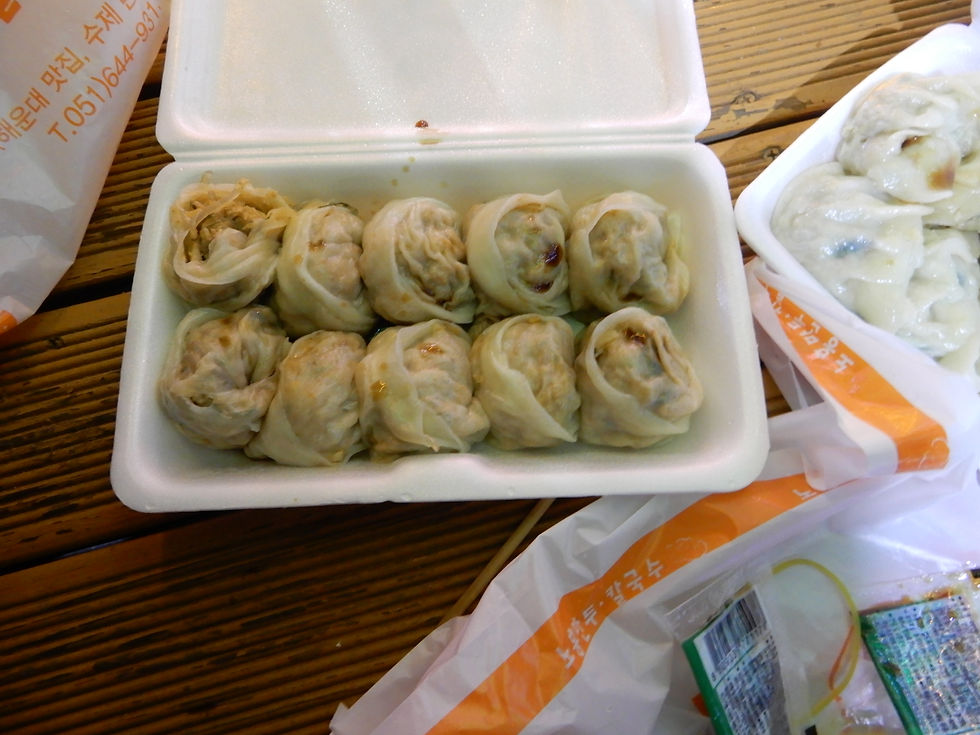
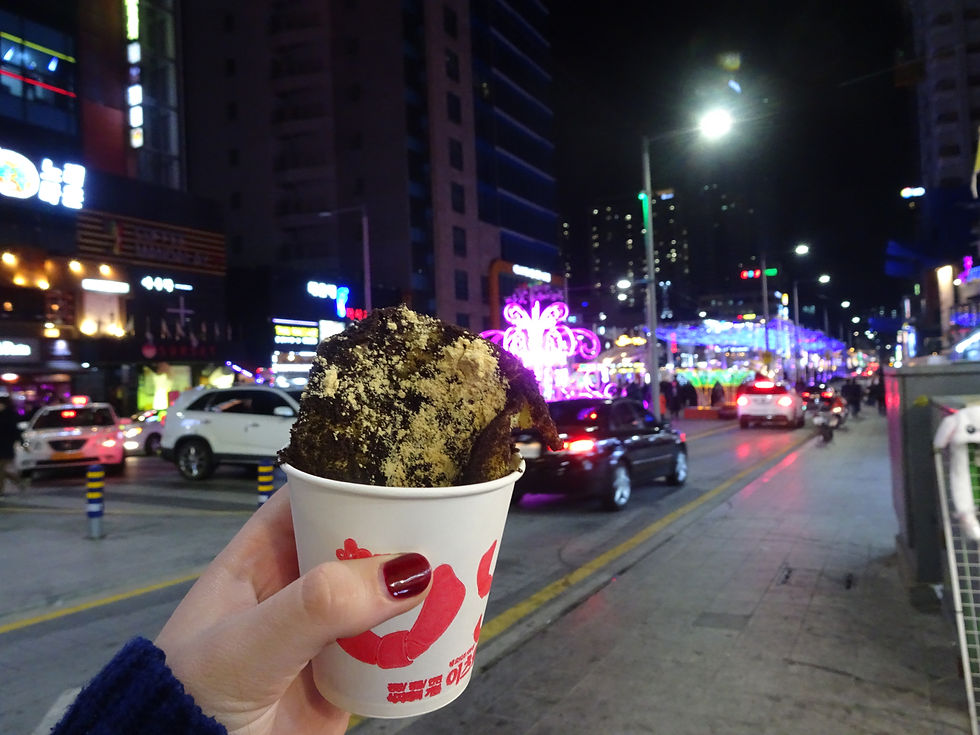
We at street food, prawn cones and mandu (dumplings).

spicy chicken and hotteok (a filled pancake) also filled the spot

What would a day in South Korea be for us without coffee (or sweet potato lattes) and cake?

or eating some great South Korean dishes like the budae jjigae we ate in Busan (which is an army stew which was created after the way when South Koreans were supplementing their meager diets with the rations of the US Armed Forces

and still is popular today...well probably more popular as it is a choice and not a necessity for survival.
And of course there was another array

of side dishes that would be enough to fill an empty belly,
in Gyeonju we ate street food

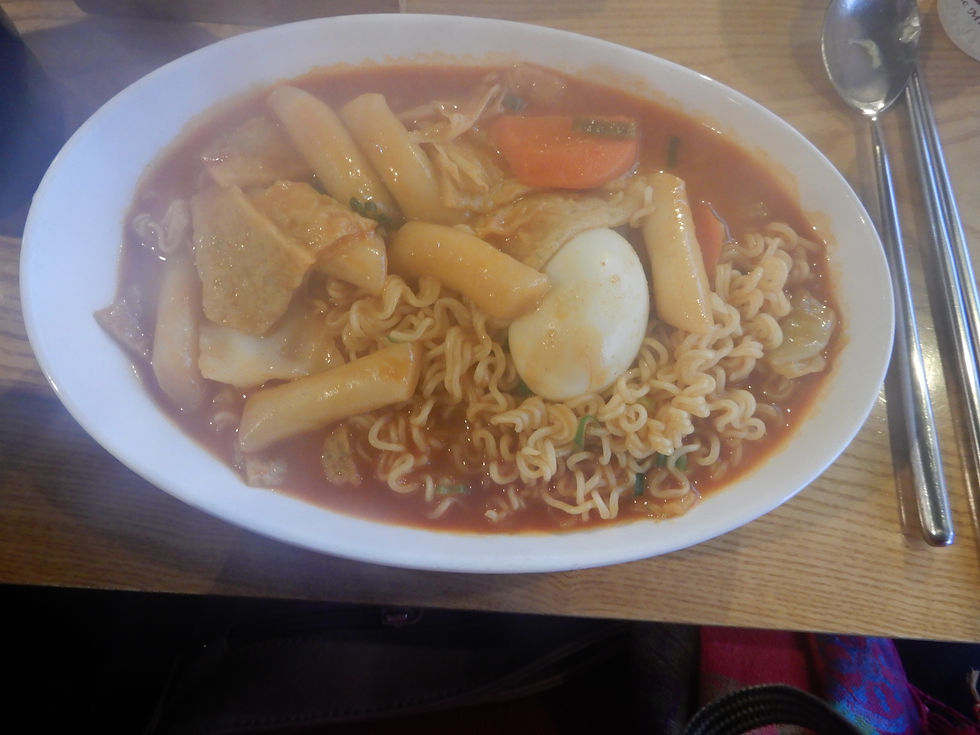
and tteokbokoi and ramyun of which was the best sort of comfort food
and what would a day in
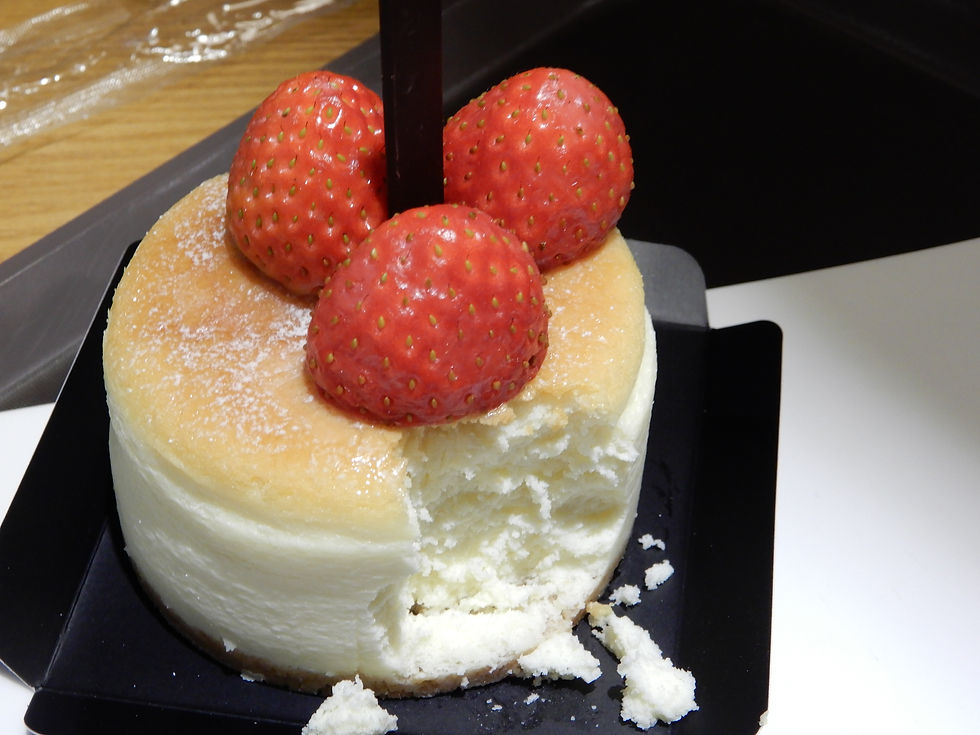
South Korea be without sweet potato lattes and cake
our last meal in Busan was tteokboki at the station and I am so looking forward to coming back and trying out a whole lot more food.

Comments