
Shirley Tours: Culture, Shopping and Food in Seoul
Jan 18, 2019
6 min read

Our last full day in Seoul yesterday was spent doing what we have been doing every other day, enjoying the sights, eating, lots of walking, a bit of culture interspersed with a little shopping (okay it was maybe a lot of shopping) but we decided to keep above ground as much as possible enjoying the sights of this beautiful city rather than being in the underground (even if it is amazingly efficient, fast and cheap)
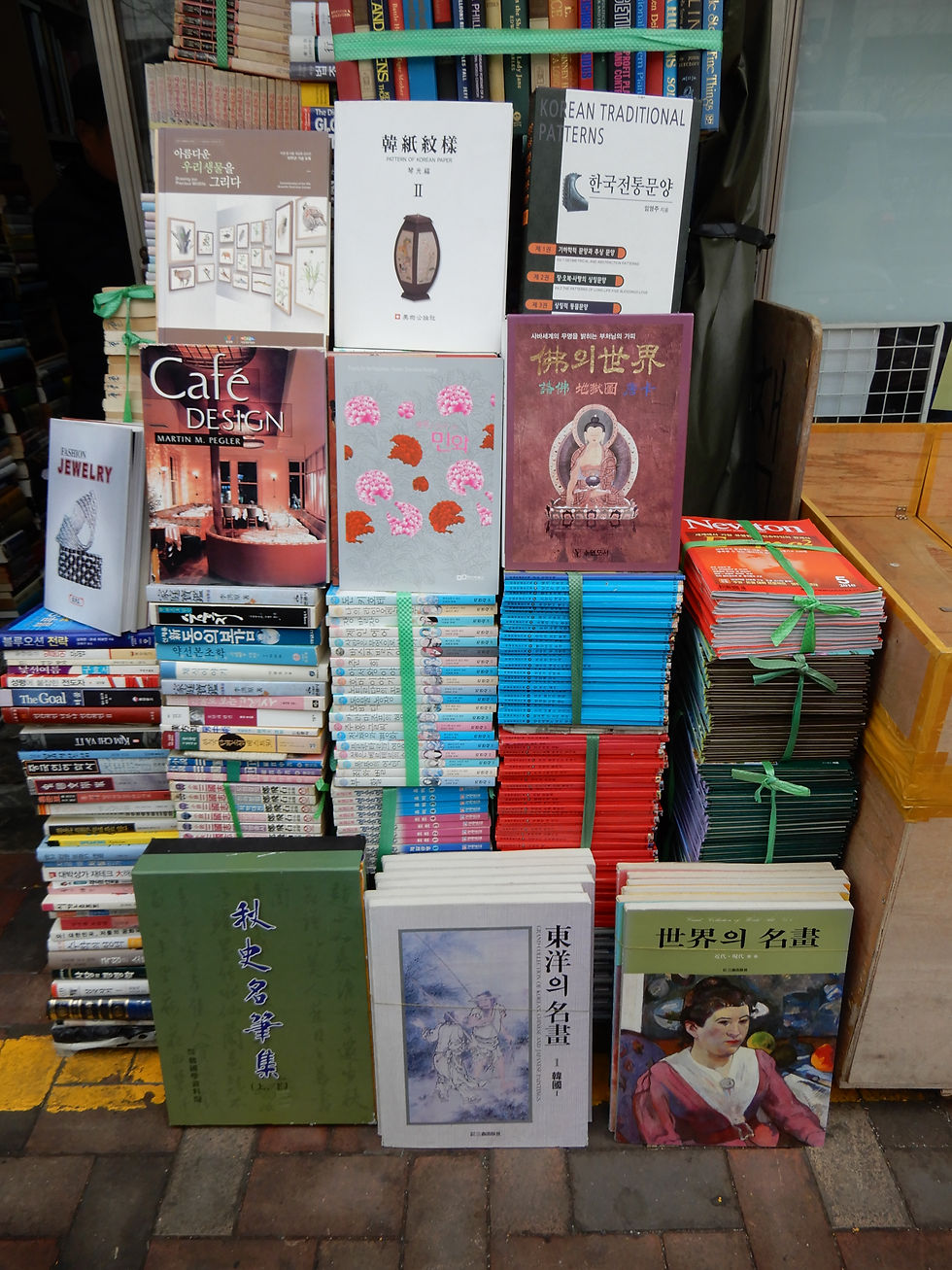
We started the day at Dongdaemun which has both shopping (malls and markets) and culture. We wandered through the market which during the day seems more like a local market whereas at night it seems to brimming with tourists. My favourite section (apart from food of course ) is the area that is for books alone and if my Hangul was any better I could have spent some money there.
Dongdaeumun is also home to one of the last remaining gates known as either Dongdaemun or Heunginjimun Gate (the Gate of Rising Benevolence or the East Gate) which is the largest of the four main gates of the fortress walls.

What is unique about this gate is that it has a half circle shaped wall that protects the gate and is the only one of the Seoul gates that has the circular wall.

Part of the market runs alongside the Cheonggyecheon Stream and that my next trip to Seoul will have a designated day to do the Stream which is nearly 11km long and get off and explore the different areas around it.
We stopped for an early lunch, and I finally ate tonkatsu (crumbed pork with a curry type sauce) alongside a noodle soup and banchan for miles and again I marvel at how cheap it is to eat a decent meal in this city (and how it is usually cheaper than our coffee and cake).

After lunch we made our way to Jongmyo Shrine which houses the burial tablets of 16 Kings and 18 Queens of the Joseon dynasty. Entry to the Shrine is W1000 ($1.25 Aus) or included in the Integrated Palace Pass(which we had bought at the beginning of our holiday). On every day except Saturday you are required to wait for a guided tour of the site and part of me was happy it is Saturday so we could wander around alone, another part of me wished that we had someone to tell us what everything was.
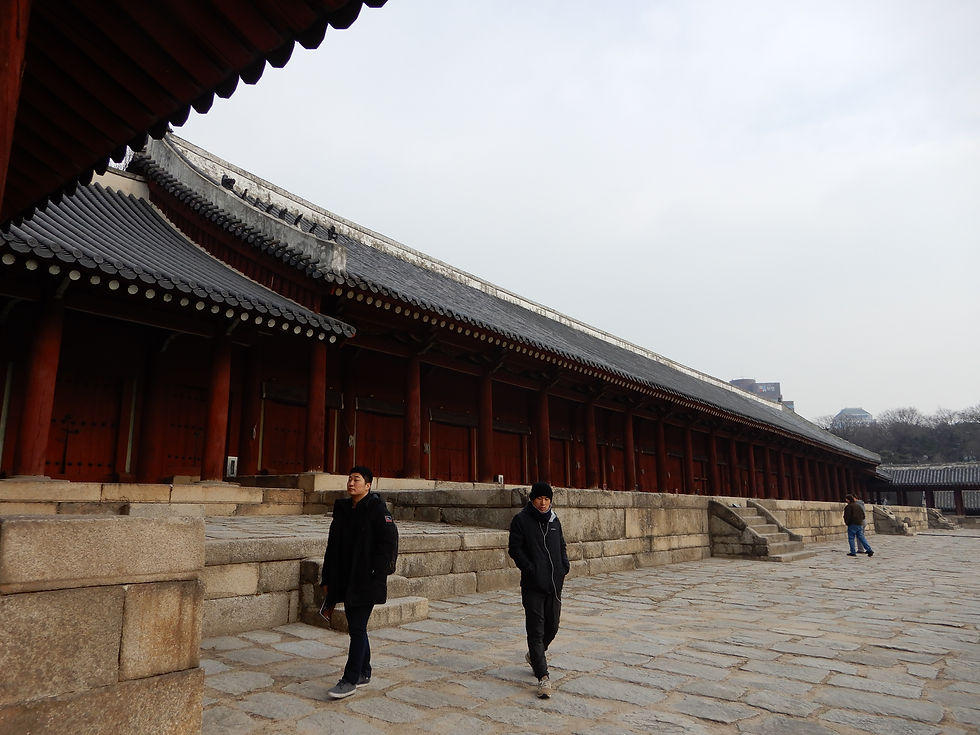
Jongmyo Shrine was built by King Taejo in the late 14th Century but underwent reconstruction after being destroyed by the Japanese invasion in 1592. I find it amusing though that not all the kings and queens of this era were enshrined here because those that had short or undistinguished reigns or were dethroned weren't and two notable kings Yeonsangun (10th) and Gwanghaegun (15th) were not either as they were considered to be disrespectful figures and as on the first Sunday in May the Jongmyo Jerye/Daege (a rite worshipping the Kings and Queens of the Joseon Dynasty) I guess they don't want to honour people they don't think are worthy(although reading some of the histories of the kings of that era I think there should be a few more added to the 'disrespectful' list.)
We left the Shrine, before heading down the road to Tapgol Park
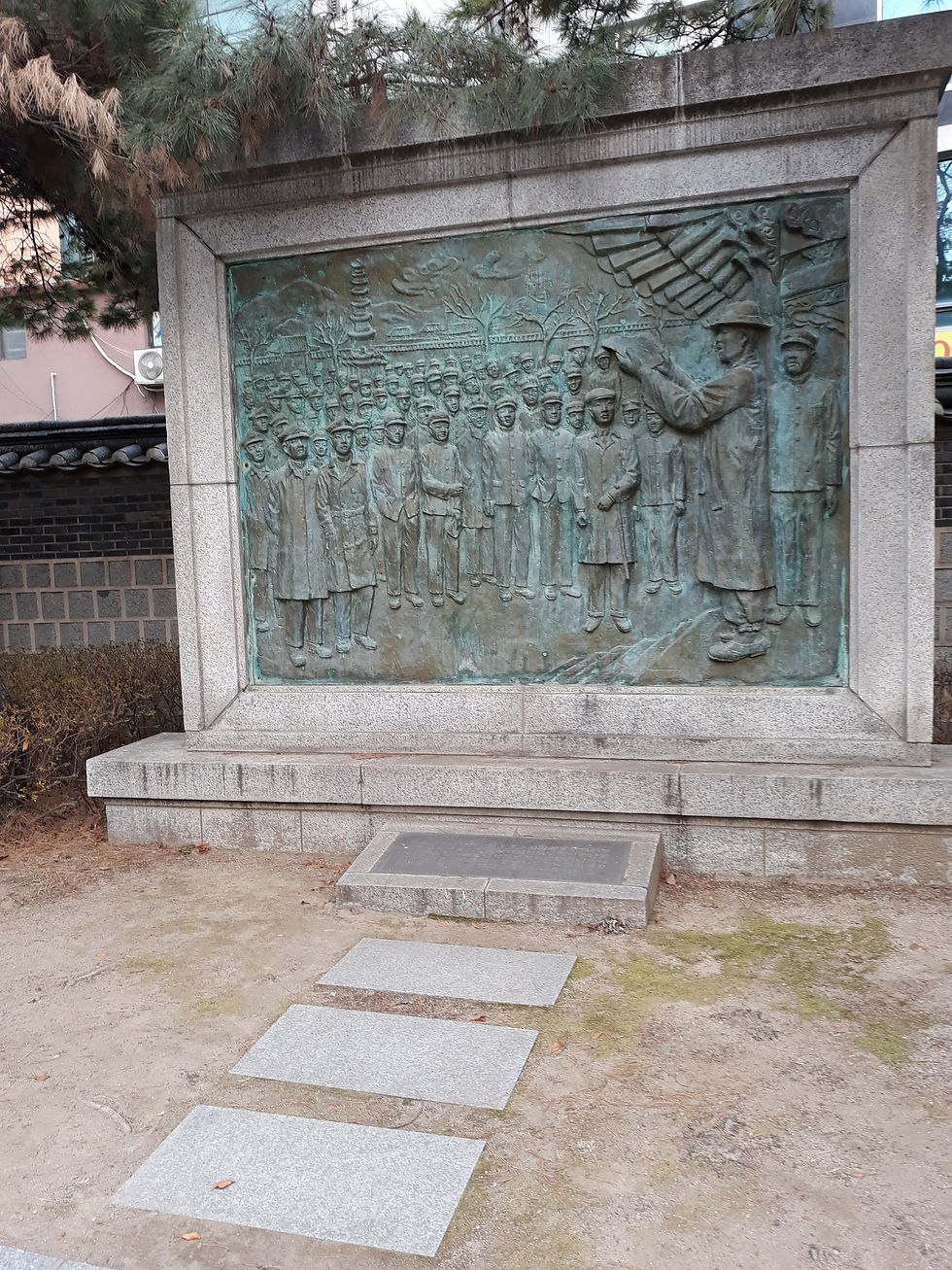
which is home to the March 1st 1919 Movement which included the first reading of the Proclamation of Independence from Japanese rule and has many pictures depicting the independence protests of this period.
There are also the remains of ten-storey pagoda of Weongaska Temple which was originally built during the Goryo Dynasty and destroyed in the Joseon when Buddhism was repressed.
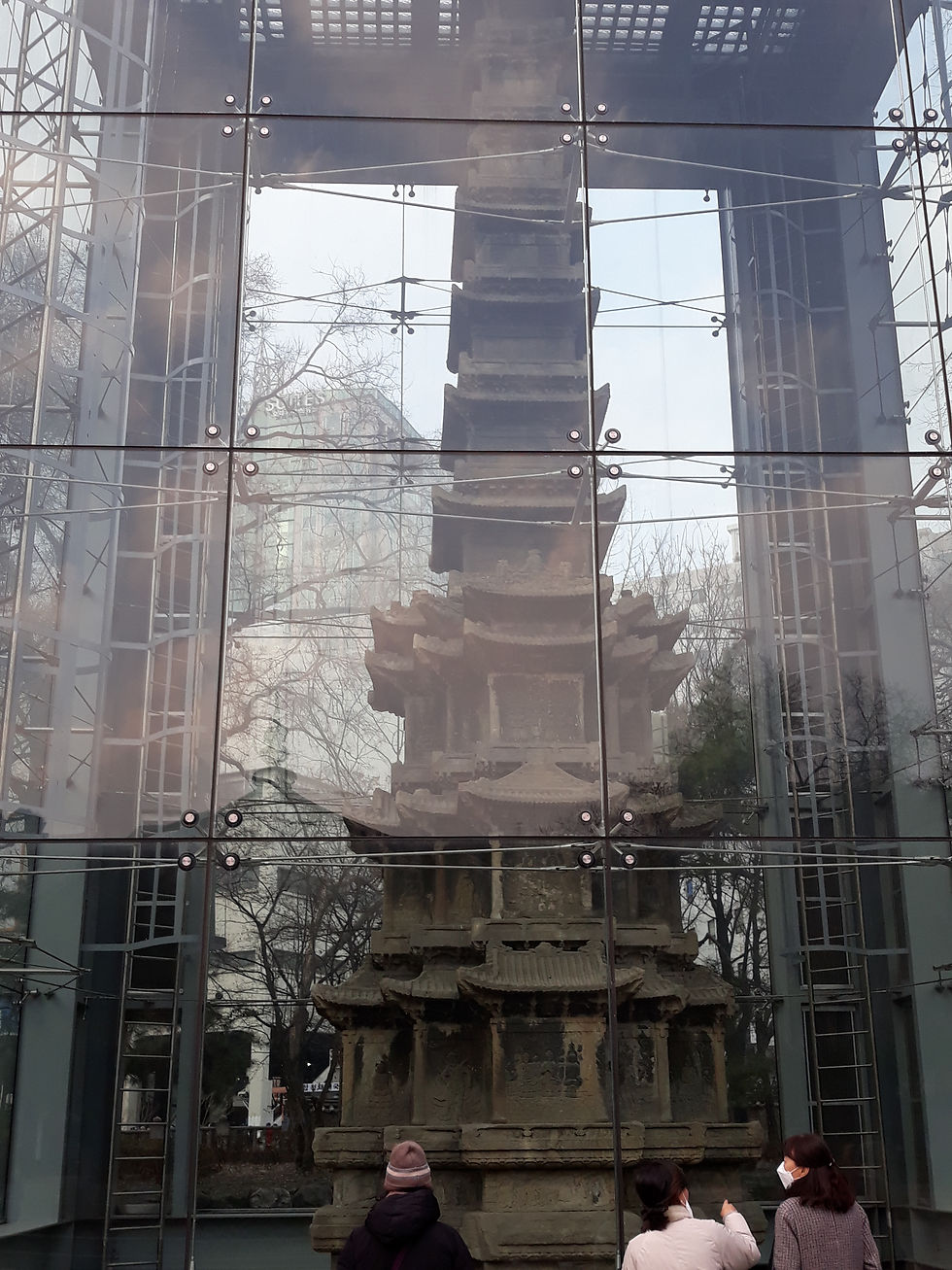
The temple is encased behind glass which makes taking photos a little difficult but it is impressive to see.
It is also a place where people (mostly men) gather to play Go (a strategy game like Othello) chess and draughts and it is a great place to just people watch (and if you are fanatical about Go as a lot of Koreans are you would probably love to sit and watch them play). Next and last stop on the historical tour was Unhyeongung Palace which was the home of the father of Emperor Gojong who lived here himself until he took over the throne.

It was once as grand a palace as any of the others in Seoul but over time many of the buildings were damaged or destroyed and just a small section of the original palace still exists today. It is free to enter and on weekends there are many weddings that take place here so you may be lucky enough to come across one (we didn't unfortunately)
We left the palace and shopping began in earnest, our first stop at one the stores that we visited earlier just outside the Hanok village near Anguk Station. Everyone (except for me) bought bags there, really nice ones and I was tempted but didn't find a pattern that I really liked and I didn't want to buy one just for the sake of it, but if I find that store the next time I come back who knows how much stuff I will bring back with me!!!!

Our next stop was Namdaemun home to another of the gates of Seoul, Sungnyemun(Namdaemun) Gate which has had it's share of troubles, not just from wars and general decay and destruction caused by the expansion of the city but arson in the early 2000s which cost W20billion to repair. But the main reason we were here was not for the history (as that part of the tour was over ) but for the shopping, our last day in Seoul and we all had money to burn and souvenirs to buy!!!

Namdaemun Market is huge with lots of stores and stalls selling everything imaginable and we had huge amounts of fun wandering around, purchasing way too much and wondering how we were going to fit things into our suitcases- although because I have the extra one maybe things aren't going to be that hard after all.
Our next stop for the evening was Hongdae which is a great
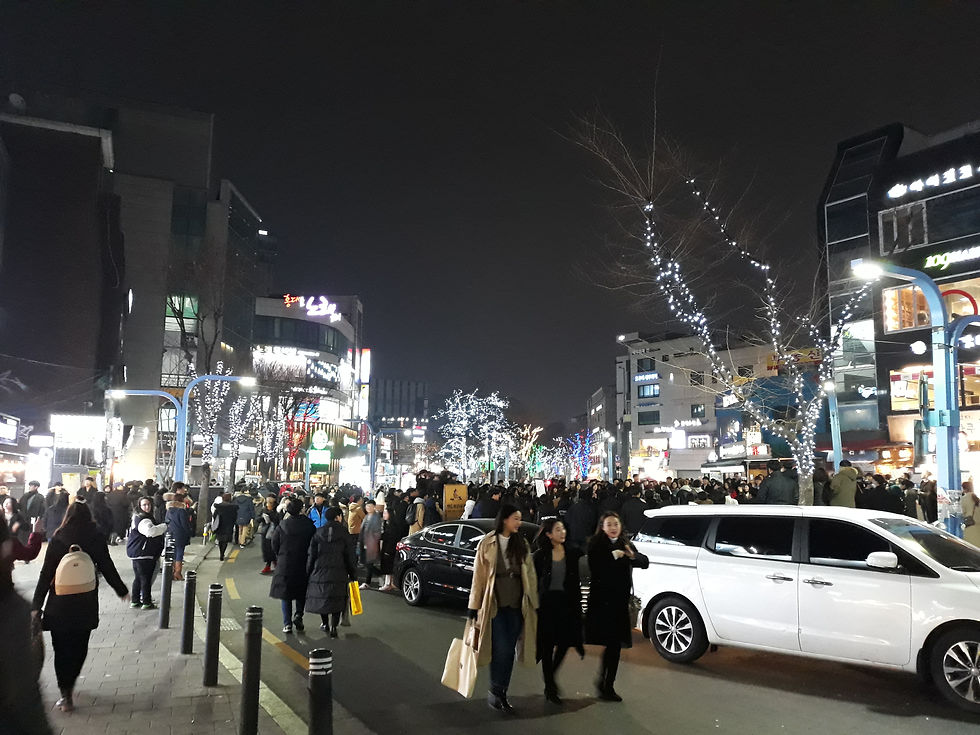
area for the young and young at heart as it is close to Hongik University and has a great vibe and I would recommend younger people who want to experience the nightlife of Seoul to stay around this area because it is hip and exciting. There are some great stores, great coffee (which was of course accompanied by a delectable sweet treat ) lots of market stalls and amazing buskers. Because of it's location you wonder how many 'trainee idols' are out there testing the waters and getting some performance skills (a lot were wearing the face masks that they were when going incognito) and there were some that performers that must be regulars because they had their fan clubs and I think it would be amazing to be part of that vibe on a regular basis because I had so much fun there and I think in the warmer weather it would be even more amazing because more people and buskers would be out there plying their trade.

As we were about to leave we came across a soondae stall (Korean blood sausage) and I realised that this was one of the foods that we hadn't tried yet from my list. I love black pudding normally so the taste didn't bother me but it was a little chewier than I am used to and think that maybe if I tried it in a soup I would like it more (I did read that if you like mochi mixed with blood than you would like soondae and I think that is a fairly accurate description. It was not served with just the sausage though but a plateful of offal, lungs, liver and kidney and I was okay with the liver and kidney but the texture of the lungs was really off-putting and the tiny piece I had was ranked about the same as stinky tofu. The stall also sold tteobokki and I think in hindsight we should have bought some and dipped the soondae into the sauce....oh well I know for next time!!
The subway station was packed as we left Hongdae, as most of the buskers had finished performing so we grabbed a taxi to do our final shop in Myeongdong and I am wondering do I really need to buy the rice bowls and cutlery set and will I use them much when I get home (although I am pretty sure I will just as a reminder of the fabulous time I have had in South Korea)

Comments